DJ Nîmes: how to book one and avoid costly mistakes
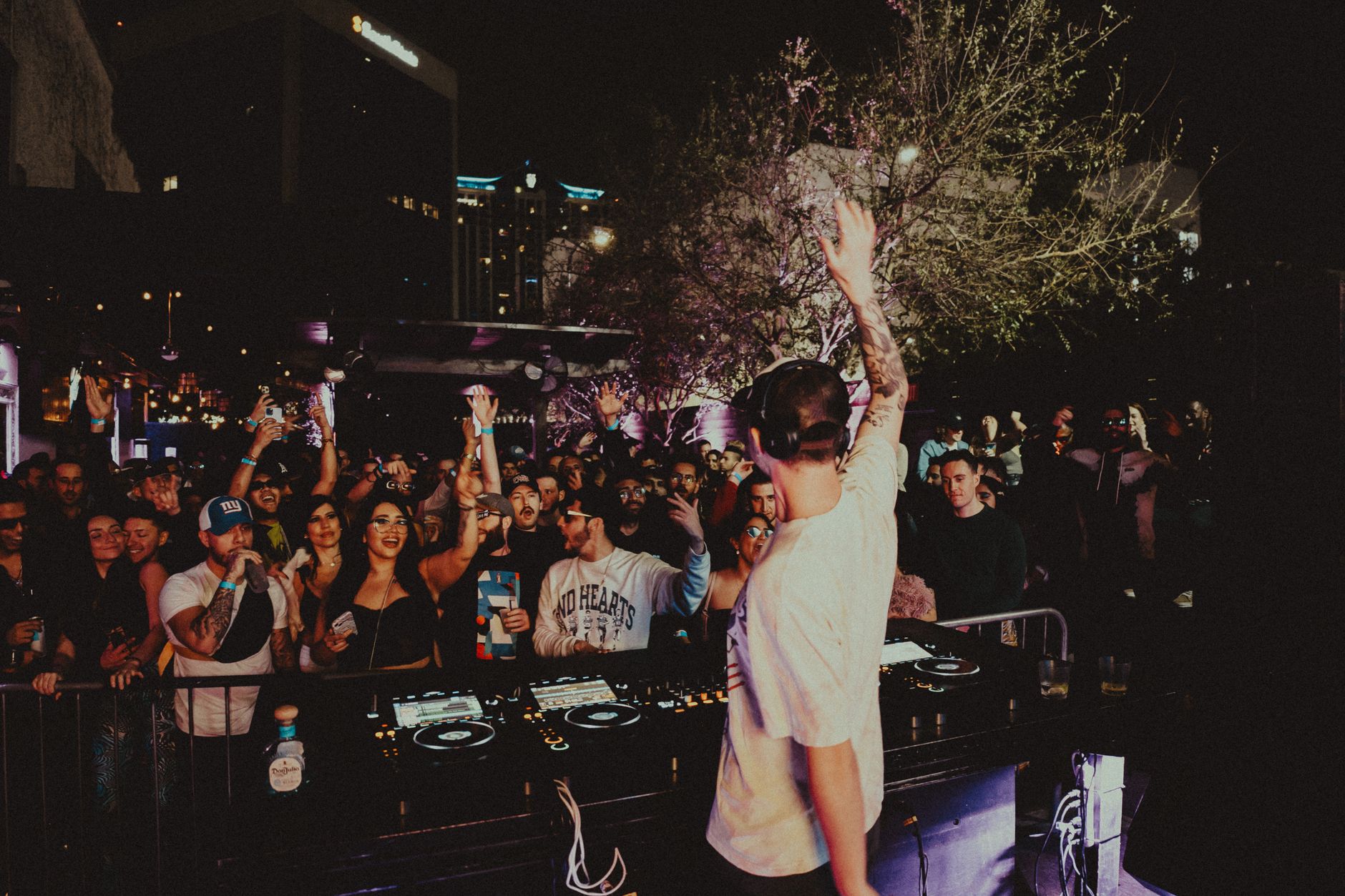
To book a DJ in Nîmes without regrets, get a written quote that lists the duration, the equipment, the overtime rate and the music rights, and ask one question early: who declares the music to Sacem? Public directories show many local DJs for birthdays and private parties, but they mostly publish no prices. Expect to compare several quotes on the same basis rather than shop by headline fee.
Nîmes is an inland city, so this is not a beach festival story. Still, the same logic applies whether you hire a DJ for a garden birthday or a sunset set by the sea. The checklist below is the one organisers use for any amplified-music evening.
What a DJ listing in Nîmes will and will not tell you
Event directories for the Gard list DJs who work birthdays, weddings and private evenings in Nîmes and nearby Uzès. Some mention a preparatory meeting to set the evening’s flow, and some also rent out sound equipment. What they rarely give is a price. A bar in the city that hosts birthdays and DJ sets from Thursday to Saturday lists its rate only “on quote”, according to a venue booking platform.
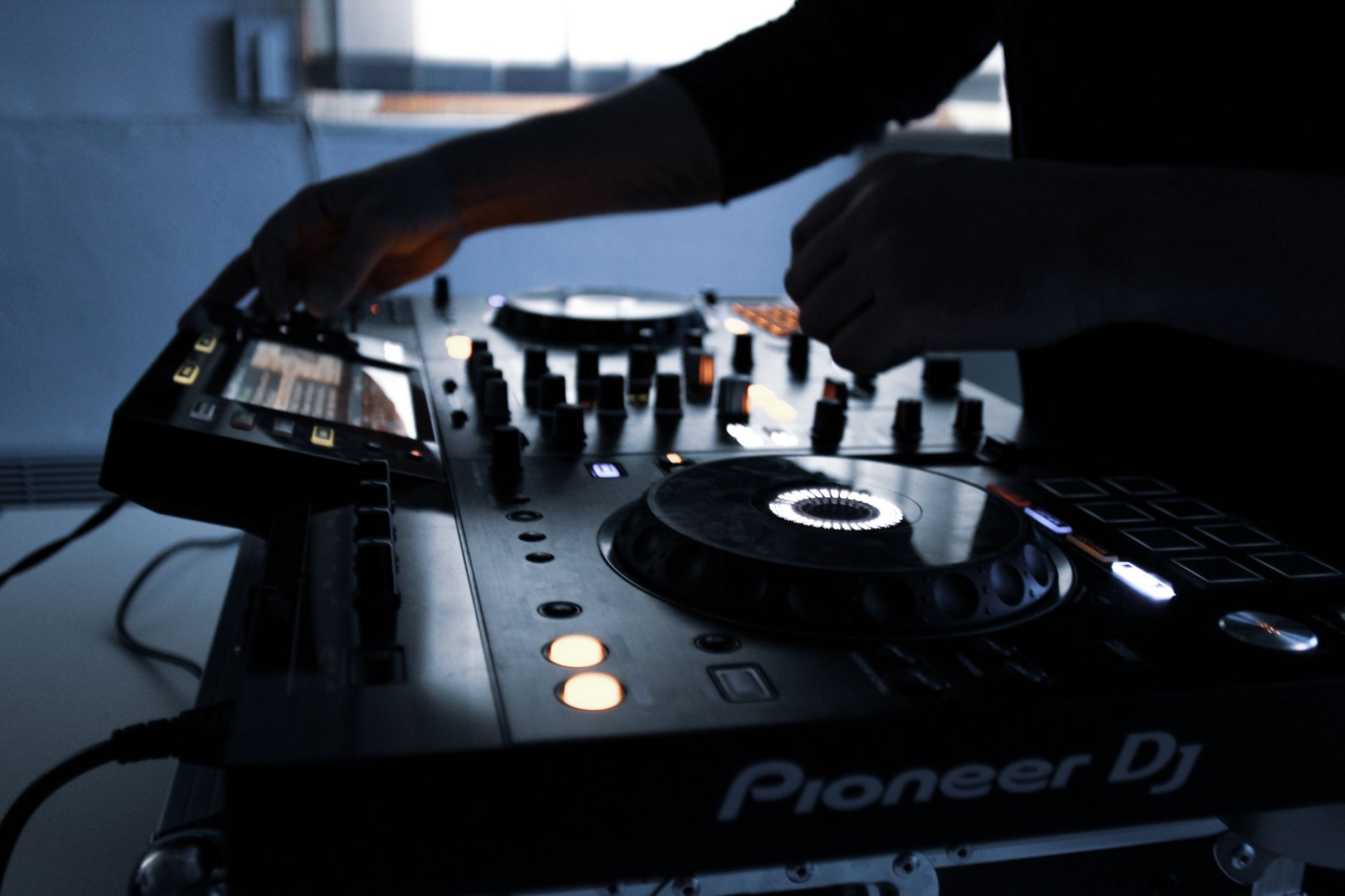
The one price figure that surfaces in a general search concerns weddings: a DJ package advertised between 1,300 and 1,900 euros on a wedding marketplace, from a provider not based in Nîmes. It is a useful ceiling for a full wedding day, not a benchmark for a four-hour birthday. For a wedding-specific breakdown, read our guide to a DJ for a wedding in the Gard, which covers what to check on sound and lighting.
The practical consequence: do not trust any figure that is not attached to a written list of what is included. A low price that excludes lighting, set-up time or a second speaker is not a low price.
The five mistakes that cost the most
1. Comparing quotes that cover different things
One DJ quotes three hours of music, another quotes five hours including set-up. Ask every candidate for the same four lines: playing time, set-up and breakdown, equipment supplied, and the hourly rate for overtime. A Nîmes provider listed on a local booking page states that extra hours are charged at an hourly rate fixed in advance. That is the right model: the rate is known before the party, not negotiated at midnight.
2. Skipping the preparatory call
A short call or meeting to agree the style, the key moments (cake, speeches, first dance) and the room constraints prevents most disappointments. Directories themselves flag this step as part of a professional service.
3. Forgetting the venue
Check power supply, available floor space, access for loading and any sound limiter or curfew in the room. Many rented halls impose their own rules, and some require the host to hold the right authorisations. Ask the venue before you sign with the DJ, not after.
4. Assuming music rights are someone else’s problem
See the next section. This is the point most hosts discover too late.
5. Ignoring the volume rules
A good DJ will know them, but a bar or a venue that holds regular events is the party legally responsible. More below.
Sacem: does a private party need a declaration?
The answer depends on the kind of event. Sources disagree on grey areas, so treat the following as a map, not legal advice.

- Strictly private family event. According to Legalstart, you do not have to make a Sacem declaration for a private party, and for a wedding or another family celebration there is no need to pay rights to Sacem.
- Paid or public evening. The same Legalstart page indicates that the rule is the same for paid private parties as for public events when the party is ticketed, with the fee tied to the event’s receipts.
- Rented hall. An article from a venue booking magazine, ABC Salles, takes a stricter view: once music is played in a public setting, including a private party in a rented hall, a prior declaration may be needed. The amount depends on the type of broadcast and the level of receipts.
For a bar, the rule is clear. Service-public.gouv.fr states that you must obtain a prior authorisation from Sacem to broadcast music in a business. For cafés and restaurants, the fee is based on the number of seats, including a sound-equipped terrace, and the population of the town. A separate Spré fee, collected by Sacem for performers and producers, comes on top. Service-public.gouv.fr, whose page was last verified on 12 August 2025, also notes that declaring before installing sound equipment earns a 20 percent reduction, and that invoices are payable within 25 days. The organiser pays, not the DJ by default.
If your event is ticketed, open to the public or held in a business, ask Sacem directly before the date. Do not rely on the DJ saying that rights are “covered” without seeing in writing who handles the declaration.
Volume: the limit that applies to venues
If your DJ plays in a bar, a club or any venue that regularly hosts amplified music, French noise rules apply. According to government summaries of decree no. 2017-1244 of 7 August 2017, venues playing amplified music at an average level above 80 dB(A) must cap output at 102 dB(A) over 15 minutes, instead of the former 105 dB(A). The decree adds a limit of 118 dB(C) over 15 minutes to control bass. It covers indoor and open-air venues, including festivals.
A venue falls under the rules if amplified music is played at least 12 times a year, or three times within 30 consecutive days for seasonal activity. Provisions sit in articles R571-25 to R571-30 of the Code de l’environnement. Sector groups noted at the time that electronic music and reggae are rich in low frequencies, so the bass cap matters for dance sets. A one-off birthday in a private garden is a different case, but neighbours can still complain about noise. Ask the DJ what limiter or monitoring equipment they bring, and confirm the details with your town hall if you plan an outdoor party.
A simple booking checklist
- Three written quotes with identical scope.
- Playing time, set-up and overtime rate stated.
- Equipment list: speakers, mixer, microphone, lighting.
- Backup plan if the DJ is ill or the gear fails.
- Who declares music to Sacem, if your event requires it.
- Venue rules on volume, curfew and power.
- Deposit amount and cancellation terms in the contract.
Organisers of larger events think the same way, just with more zeros. When a headline set is involved, the questions stay identical: duration, sound, rights, safety. Our piece on DJ Snake at the Château de Chambord shows how a one-off show is presented to ticket buyers, and our look at Déferlantes 2027 at Le Barcarès is a reminder of how much sound and logistics a coastal festival has to plan.
Questions fréquentes
How much does a DJ cost in Nîmes for a birthday?
No reliable public price list exists. Local directories mostly publish quotes on request. A wedding marketplace advertises 1,300 to 1,900 euros for a wedding package, but that is a different, longer service. Ask for written quotes.
Do I have to declare the music to Sacem for a private party?
According to Legalstart, a strictly private family party does not require a declaration. A paid or public event, a bar or a rented hall may. Ask Sacem if in doubt.
Who pays Sacem, the DJ or the host?
According to Service-public.gouv.fr, the business operator or event organiser pays Sacem and the Spré fee. Settle this in the contract.
Is there a legal volume limit?
For venues regularly playing amplified music, the 2017 decree sets 102 dB(A) and 118 dB(C) over 15 minutes. A private home party is not governed in the same way, but noise complaints remain possible.
What should the contract include?
Playing time, equipment, set-up, overtime rate, deposit, cancellation terms and who handles music rights. Anything not written down is hard to claim later.
Can I book a DJ at the last minute?
You can try, but a short notice leaves no time for a preparation call or comparison, and discounts Sacem grants for early declaration (more than 15 days before an event, according to a legal summary) are lost.

Juliette follows seaside festivals and open-air events along the coasts of Europe and beyond. She checks every figure against the directory data before it is published.